
Root canal treatment is used for a number of different reasons, however it is primarily used to maintain a tooth in an animals mouth, whereby that tooth would normally need to be extracted.
What is root canal used to treat?
Root canal is used to treat damaged and devitalised teeth and may be used to treat dogs with malocclusions, where an abnormally positioned tooth is causing damage to other structures, such as other teeth or soft tissues within the mouth. It is not used in veterinary medicine as a cosmetic procedure, it is mainly used to preserve those teeth which we prefer not to remove.
Some teeth, such as the maxillary and mandibular canine teeth, the mandibular 1st molar and the maxillary 4th pre-molar, have both structural and functional significance, and extraction of these teeth usually requires a significant surgical procedure which can result in post operative discomfort. For example, the mandibular canine teeth have a root that is approximately twice the length of the crown visible in the mouth (sometimes 40+mm in length) with a diameter than can account for 80-90% of the thickness of the mandible in this area. Extraction therefore is not only an incredibly uncomfortable procedure but also has the potential to significantly weaken the lower jaw in that area and make it susceptible to jaw fractures here.
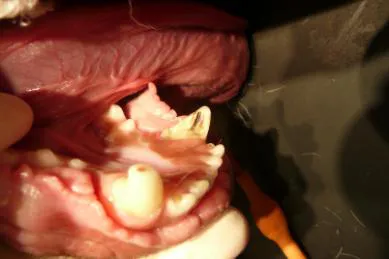
What does a root canal involve?
Root canal treatment of teeth is an elegant and minimally invasive technique that not only results in an immediate, pain-free tooth at the end of the procedure. It allows a tooth that is otherwise dead, to remain in the animal’s mouth, maintaining its structure and function and avoiding a painful extraction of a large tooth.
To carry out a root canal treatment we need to clean out the inside part of the tooth where the vital structures such as nerves and blood vessels are or were before the tooth became devitalised. In devitalised teeth, where the tooth has been 'dead' for a period of time, the pulp chamber is full of black, foul smelling material. The canal is shaped and cleaned out using a combination of filing, with long thin files that sequentially increase in size; and flushing with sodium hypochlorite (bleach).
Once the tooth has been adequately cleaned out, the pulp is filled up with an inert material. Then a 'final restoration' of a material which is similar in colour to the enamel is placed in the openings of the pulp to seal the tooth from saliva and bacteria normally present within the oral cavity. The final appearance of the tooth is the same as the shape of the tooth before the procedure.

The procedure is carried out under general anaesthesia and is usually carried out in a single stage, although sometimes, depending on the inflammation within the tooth, the procedure is carried out in 2 stages. The animals recover well and are usually discharged then same day. We always recall patients 6 months after their initial treatment to repeat x-rays of the tooth and its surrounding structures to ensure that the original injury is healing well. The procedure is very successful, with failure rates of less than 5%, which is very low.
Making a Referral
For emergencies, call us on 01962 767920 if you feel your case needs seeing on the same day or within 24 hours. Our telephone systems will prioritise you when you press option 1. For urgent and routine referrals, please use our online referral form